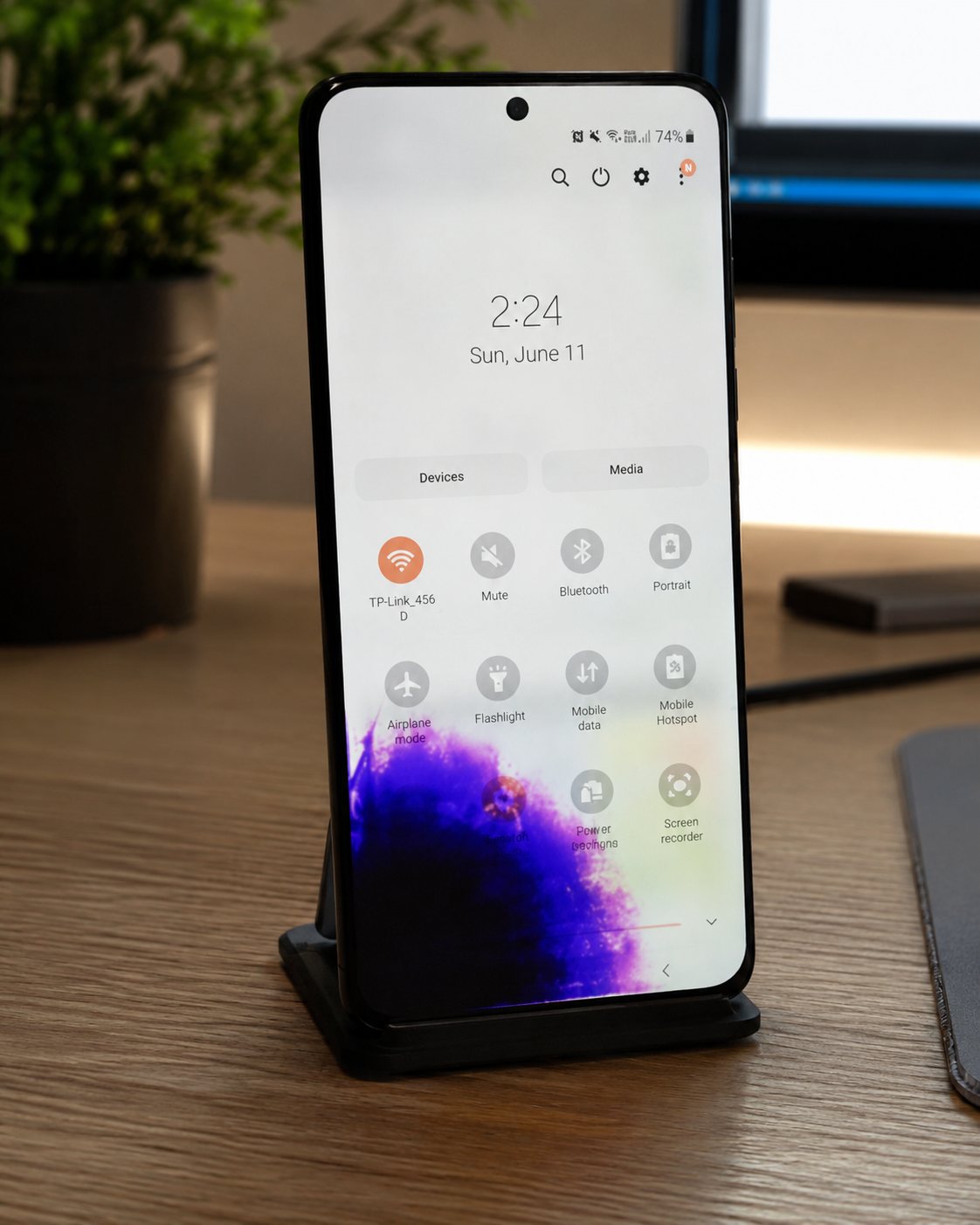
Does the glass have to be cracked?
No. The outer glass does not always need to be broken for the OLED panel to be damaged.
A phone can fall, get pressed, or receive an impact while the glass still looks perfect. However, the internal OLED layer underneath the glass may already be damaged. This is why some phones show purple or blue spreading spots even when there are no visible cracks.
Common reasons for purple or blue color spreading
1. Phone drops
A drop can damage the OLED panel internally. The damage may appear immediately, or it may show up later as a purple or blue spot.
2. Pressure on the screen
Keeping the phone in a tight pocket, sitting on it, sleeping on it, or pressing hard on the screen can damage the internal display layer.
3. Water or moisture damage
Moisture can affect the display, screen connector, flex cable, or internal circuits. Sometimes the screen works normally at first, then purple or blue marks appear days later.
4. Previous hidden damage
The screen may have been weakened by an old impact. The visible problem may only appear later after normal use.
5. Non-Original replacement screens
Some replacement OLED screens are more likely to develop color bleeding, lines, or dark spots.
Why does the purple or blue spot spread?
When part of the OLED layer is damaged, nearby pixels can also start to fail. Daily use, heat, touch pressure, and movement can make the damaged area grow.
A small purple spot can turn into a larger blue or dark area. In advanced cases, it may become completely black, meaning that part of the screen is no longer displaying an image.
Can you stop the color from spreading?
Unfortunately, if the OLED panel itself is damaged, there is no guaranteed way to stop the spreading. Lowering the brightness, avoiding pressure, and keeping the phone cool may slow the issue down in some cases, but they will not repair the damaged pixels.
The only reliable solution is usually screen replacement.
Can purple or blue OLED bleeding be repaired without replacing the screen?
If the damage is inside the OLED panel, it cannot usually be repaired in a reliable way. Restarting the phone, updating the software, or resetting the device will not fix physical OLED damage.
However, a technician should still inspect the phone before replacing the screen. In some cases, the issue may be related to:
- The display connector.
- The screen flex cable.
- Moisture inside the phone.
A proper diagnosis confirms whether the screen itself is damaged or whether another internal part is causing the issue.
What should you do if you see a purple or blue spreading spot?
If the spot is growing, take action quickly:
- Back up your important data.
- Avoid pressing on the screen.
- Do not try to massage or push the spot away.
- Keep the phone away from heat.
- Avoid using the phone if it was exposed to water.
- Visit a repair center for inspection.
Backing up your data is important because the screen can sometimes get worse suddenly and become difficult or impossible to use.
Does a purple or blue spot mean the screen will fail?
Not always immediately, but it is usually a warning sign of real OLED panel damage. The screen may continue working for days, weeks, or even longer, but if the spot is spreading, the damage is getting worse.
In some cases, the display may suddenly become darker, develop more lines, or stop showing an image in the damaged area.
Final thoughts
A purple or blue color spreading on an OLED screen is usually caused by internal display damage from impact, pressure or moisture. It may start as a small spot, but it can grow over time and eventually turn into a black or dead area.
If you notice this issue, back up your data first and have the phone checked by a professional technician. In most cases, if the OLED panel itself is damaged, replacing the screen is the best and most reliable repair option.